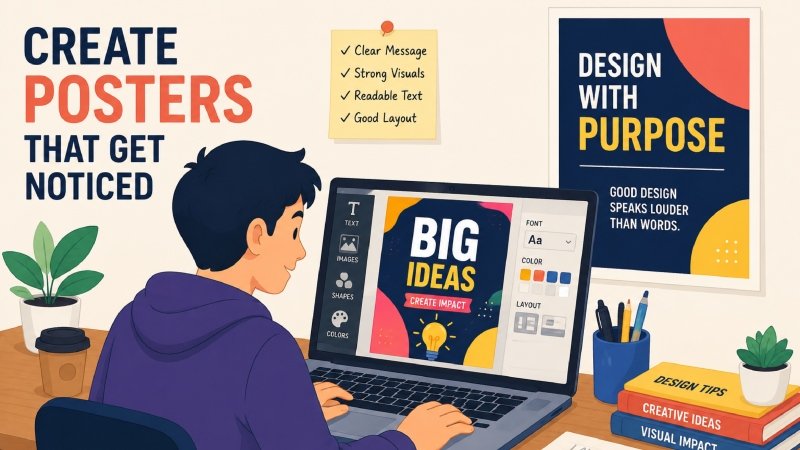
People are surrounded by visual content every day. From social media feeds and websites to digital advertisements and event announcements, countless designs compete for attention. In this environment, a well-planned poster can help an important message stand out.
A poster does not need to be complicated to be effective. The most successful designs often combine a clear message with an attractive visual style. Whether the goal is to promote an event, announce a special offer, share information, or support a personal project, thoughtful design can make the content easier to notice and remember.
Start With a Clear Purpose
Before choosing images or fonts, it is helpful to decide what the poster needs to achieve. A promotional design may focus on encouraging people to take action, while an educational poster may need to present information in an organized way.
Understanding the purpose also helps determine what information should receive the most attention. A viewer should be able to understand the main message without having to study the design for too long.
A simple plan can prevent the poster from becoming overcrowded. Decide which details are essential and which information can be left out.
Build a Strong Visual Hierarchy
Good poster design guides the viewer’s attention. The most important element should usually be the easiest to notice, followed by supporting details.
For example, an event poster might highlight the event name first, followed by the date, location, and additional information. A business promotion may place the product or offer at the center of attention while keeping the call to action easy to find.
Size, spacing, typography, and positioning all contribute to this visual structure. When these elements are balanced properly, the design becomes easier to understand.
Exploring Ideas With AI-Assisted Design
Coming up with a design from an empty canvas can sometimes feel difficult, especially for people without formal design experience. This is where AI-assisted tools can help users explore different creative directions more efficiently.
An AI poster maker can help turn a basic concept into a starting point for a visual design. Instead of spending excessive time trying to decide how every element should be arranged, users can experiment with different ideas and refine the result according to their needs.
This approach can be useful for a wide range of projects, including social media graphics, event promotions, announcements, educational materials, and business marketing content.
Choosing Images That Support the Message
Images can influence the mood of a poster and help communicate an idea quickly. However, the image should always support the purpose of the design.
A bright and energetic image may work well for an entertainment event, while a clean and simple visual may be more suitable for a professional announcement. The important thing is to choose visuals that fit the audience and message.
Using too many images can make the design feel crowded. In many cases, one strong visual can have a greater impact than several unrelated elements.
Typography Can Change the Entire Design
The words on a poster need to be easy to read. A decorative font may look attractive, but it should not make important information difficult to understand.
Using different font sizes can help separate the headline from supporting details. Consistent spacing can also make the overall design feel more organized.
It is usually better to use a limited number of complementary font styles rather than combining too many different options. A clear typographic structure allows the message to remain the main focus.
Designing for Different Platforms
Modern posters are often shared digitally rather than printed. This means creators need to consider how their designs will appear on different screens.
A poster that looks good on a large monitor may appear differently on a smartphone. Important text should remain readable, and the main visual elements should not be too small.
Creating designs that can be adapted for social media, websites, and printed materials can also save time. Flexible layouts make it easier to reuse the same creative idea in different formats.
Human Creativity Still Leads the Process
AI can assist with ideas and design exploration, but the final creative direction still comes from the person creating the poster. An AI poster maker can help users explore different concepts and visual possibilities, but human judgment is still needed to decide whether a design feels appropriate, communicates the right message, and connects with the intended audience.
Creators can personalize their designs by changing wording, adjusting visual elements, adding branding, and making decisions based on their own goals. The result becomes more meaningful when technology supports personal creativity rather than replacing it.
Final Thoughts
Creating an effective poster is about more than adding attractive images and text to a page. A successful design needs a clear purpose, an organized layout, readable information, and visuals that support the main idea.
Modern AI-assisted design tools can make the creative process more accessible and help users explore possibilities more quickly. However, the strongest results still come from combining technology with thoughtful planning and human creativity.
Whether you are promoting a local event, sharing information online, advertising a product, or working on a personal project, a well-designed poster can help your message reach people more effectively.